
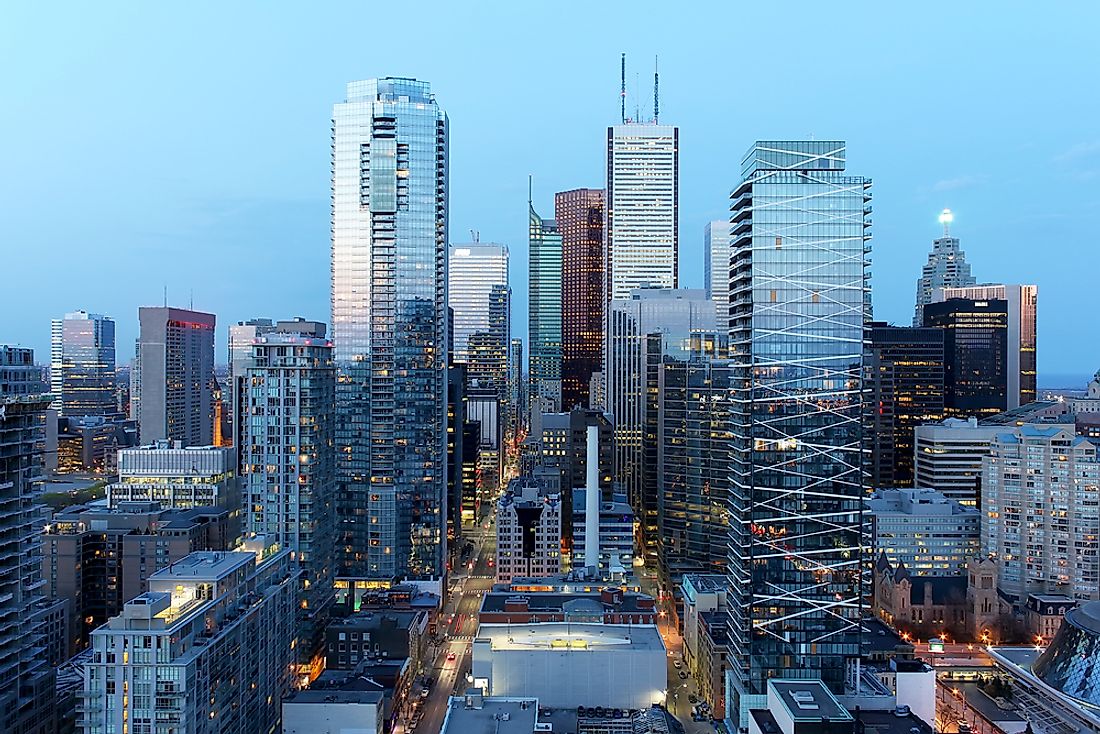
A business district gives a city its center of gravity. Business districts are more than addresses. They are the economic, cultural, and infrastructural core of urban and suburban economies. They concentrate commerce, talent, capital, and activity in ways that dispersed business locations simply cannot replicate.
A business district is a geographically defined area where commercial activity is concentrated – typically featuring office buildings, retail, restaurants, financial institutions, and professional services within walkable or transit-accessible proximity. Business districts can be formally designated (like a Central Business District) or informally recognized through market patterns. They vary enormously in scale and character, from Manhattan’s Midtown to a small-town Main Street corridor.
The Five Types of Modern Business Districts
| District Type | Key Characteristics | Famous U.S. Examples | Primary Economic Role |
|---|---|---|---|
| Central Business District (CBD) | High-density, mixed commercial, highest land value in the city | Midtown Manhattan, The Loop (Chicago), Downtown LA | Regional and national corporate hub |
| Business Improvement District (BID) | Self-funded special district within a larger area; voluntary or mandatory assessments | Times Square Alliance, Downtown DC BID, Fulton Area BID (Atlanta) | Enhanced services, marketing, safety for member businesses |
| Historic Business District | Preserved architecture, often tourism-adjacent, mixed retail and professional | French Quarter (New Orleans), River North (Chicago), Old Town (various) | Tourism draw, artisan/boutique commerce, community identity |
| Innovation / Tech District | Startup ecosystem, university adjacency, collaborative office formats | Kendall Square (Cambridge MA), Silicon Slopes (Utah), Cortex (St. Louis) | Research, startup formation, tech employment |
| Mixed-Use Business District | Residential + commercial + retail layered in same area | Midtown Atlanta, South Lake Union (Seattle), Stapleton (Denver) | Live-work-play integration, reduces car dependency |
What Makes a Business District Thrive
The best business districts don’t happen by accident. They share a consistent set of characteristics that attract and retain commercial activity:
- Transit access – Every thriving downtown district is served by multiple transit options. Workers choose the commute before they choose the office.
- Walkability – Districts where lunch, meetings, and errands happen on foot retain workers better than car-dependent areas
- Talent concentration – Employers locate where educated workers live nearby, and workers move where employers concentrate
- Amenities – Restaurants, gyms, childcare, retail, and entertainment within the district make it more than a place to work
- Safety and cleanliness – Perception matters as much as reality; businesses vote with their leases
- Anchor institutions – A major employer, hospital, university, or government agency creates sustained foot traffic and demand
What Causes Business District Decline
Business district decline is rarely sudden. It accumulates through a pattern that urban planners call a ‘doom loop’: one major anchor tenant leaves, foot traffic drops, smaller businesses follow, vacancies rise, the area feels unsafe, and the cycle accelerates.
| Decline Indicator | What It Signals | What Typically Follows |
|---|---|---|
| Major anchor tenant departure | Significant foot traffic and prestige loss | Supporting businesses lose revenue; vacancies spread |
| Rising commercial vacancy rate (>15%) | Weakening demand for space in the area | Reduced investment, lower rents, declining property values |
| Shift to remote work | Reduced weekday occupancy without replacement activity | Lunch businesses hit first; ripple effect on retail |
| Rising crime perception | Employers and employees avoid the area regardless of statistics | Accelerated tenant exit, reduced after-hours activity |
| Loss of residential population nearby | Fewer walk-to-work or walk-to-lunch consumers | Retail and F&B businesses suffer most immediately |
Business Improvement Districts: The Engine Behind Cleaner, Safer Streets
Business Improvement Districts – BIDs – are one of the most effective urban tools few business owners outside major cities know about. A BID is a defined geographic area where property owners collectively fund enhanced services beyond what the city provides: extra cleaning crews, private security, marketing and events, streetscape improvements, and business development support.
Funding comes from a mandatory assessment on commercial properties within the district, approved by local government. The assessment is typically based on property value or square footage. BIDs are governed by a board, often made up of the property owners and business operators themselves.
Research consistently shows that businesses in active BIDs outperform comparable businesses outside them on foot traffic, sales, and property value appreciation. The Times Square Alliance BID, for example, helped transform one of New York City’s most difficult commercial areas into one of its most visited.
Notable U.S. Business Districts
| City | District | Known For | Approx. Size |
|---|---|---|---|
| New York, NY | Midtown Manhattan | Global finance, media, fashion headquarters | ~5 sq miles |
| Chicago, IL | The Loop | Financial exchanges, law firms, city government | ~1 sq mile |
| San Francisco, CA | Financial District / SoMa | Tech companies, VC firms, startups | ~2 sq miles |
| Washington, DC | K Street Corridor | Lobbying firms, law firms, consulting | ~1 sq mile |
| Houston, TX | Energy Corridor | Oil and gas, engineering firms | ~5 sq miles |
| Seattle, WA | South Lake Union | Amazon HQ, biotech, tech startups | ~1.5 sq miles |
| Austin, TX | Domain / Downtown | Tech companies, creative agencies | ~2 sq miles |
Running a Business Inside a Business District: The Real Trade-Off
Higher rent. That’s the cost of a business district address. But the businesses that stay in districts and pay premium rents aren’t being irrational – they’re buying proximity to clients, foot traffic that replaces marketing, a prestige signal that matters to certain buyers, and talent who prefer not to commute to a suburban office park.
A boutique consulting firm that relocated from a suburban campus to a downtown district reported that client meetings became easier to schedule (clients would suggest walking to the office rather than the firm traveling to them), and recruiting improved for mid-career professionals who valued the commute options.
The Future: Innovation Districts and the New Model
The post-pandemic business district is evolving. Pure office towers are struggling; mixed-use districts are thriving. The most resilient business districts in the coming decade will be those that have evolved beyond Monday-to-Friday, 9-to-5 office use toward genuine mixed-use environments – where people live, eat, shop, and work in the same geography throughout the entire week.
A business district isn’t just a location – it’s an ecosystem. The businesses that understand that, and choose their location accordingly, tend to grow faster than those that just pick the cheapest available square footage.