
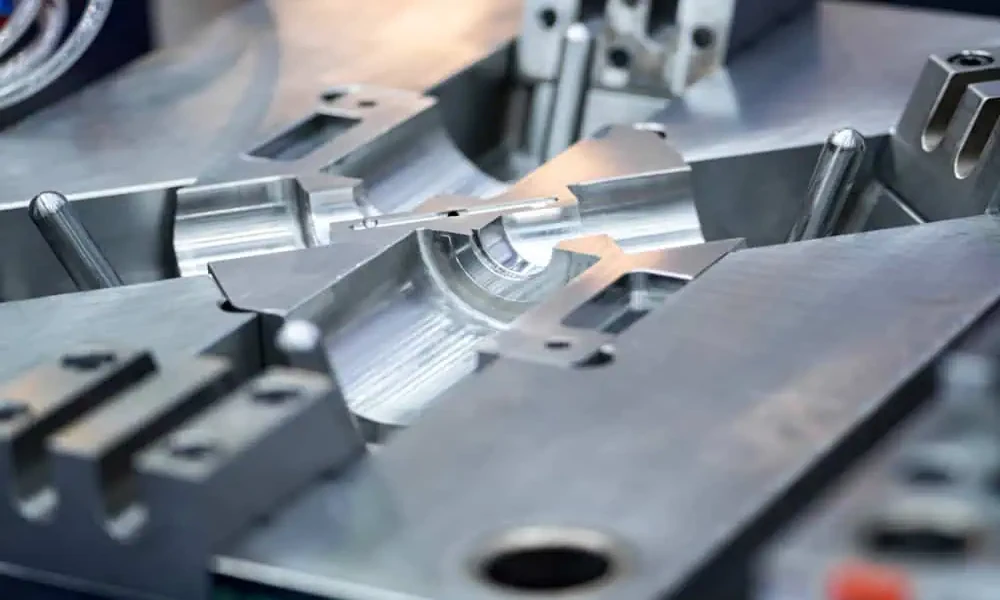
A housing modeled for CNC milling often arrives at a die caster looking perfect in CAD: crisp square corners, perfectly vertical walls, thick solid bosses and tight tolerances on every face. In a steel die, almost every one of those features causes trouble. The part sticks during ejection, thick areas shrink and leave voids, and sharp corners crack the die faster than expected. An experienced aluminum die casting manufacturer will usually spot these issues in the first design review.
Most of the cost and quality of a die cast part is fixed by its geometry long before any metal is injected. Small choices about draft, walls, ribs and machined faces decide how quickly the die runs, how long it lasts and how many parts end up as scrap. Designers who build those choices in from the first sketch save weeks of tooling changes later.
Why Does Draft Matter More on Inside Walls than Outside Walls?
Draft is the slight taper given to any surface that runs parallel to the direction the die opens. Without it, the part drags against the steel as it is pushed out, leaving scuff marks or sticking outright. Aluminum makes this worse in one particular place. As the casting cools, it shrinks, pulling away from the outside walls of the cavity but clamping tightly onto cores and internal features. An experienced aluminum die casting company accounts for this shrinkage behaviour while determining the appropriate draft angles during die design.
That is why inside walls, holes and pockets generally need more draft than outer surfaces. Deep features need careful attention too, since a small angle over a long wall still adds up to a meaningful difference in thickness from top to bottom. Where a surface truly has to be straight, such as a bearing seat, the usual answer is to cast it with draft and machine it straight afterward. Moving slides can also create undrafted or undercut features, though they add cost and maintenance to the die.
Uniform Wall Thickness: Why Do Thick Sections Cause Porosity?
Molten aluminum freezes from the die surface inward, and thin sections solidify first. A thick area surrounded by thinner walls stays liquid longest and has nothing left to feed it as it shrinks. The result is shrinkage porosity in the middle of the section and sometimes a visible sink mark on the surface.
The fix is to keep walls as even as the function allows. Heavy areas can be cored out, leaving a pocket behind a uniform wall, and stiffness can come from ribs instead of extra mass. Where thickness has to change, a gradual transition helps metal flow and solidify evenly. Thinner, even walls also cool faster, which shortens the cycle and lowers the cost of each part.
Where Should Ribs, Bosses and Fillets Go on a Die Cast Housing?
Ribs add stiffness for very little weight and can act as flow channels that help metal reach distant corners. Designers often use an odd number of ribs or stagger them so stress does not concentrate in matching spots. Bosses for screws and mounting points work best when they are hollow, with a cored hole in the middle so the boss wall matches the surrounding thickness, plus ribs tying it to the nearest wall.
Every inside corner deserves a fillet and every outside edge a radius. Rounded junctions let metal flow smoothly instead of swirling and trapping air. They also protect the die. Sharp internal corners in tool steel concentrate the repeated heating and cooling of each shot, and those spots tend to develop fine heat checking cracks sooner, which then print onto every part.
Where Will an Aluminum Die Casting Manufacturer Put the Parting Line?
The parting line is where the two die halves meet, and its position shapes much of the design. It decides which way each surface needs draft, where a thin line of flash will form and need trimming, and how features on either side line up. Dimensions that cross the parting line typically carry looser tolerances than features formed within one die half, since the halves never close with perfect precision.
Ejector pins are the other detail designers forget. They push the part out of the moving half and leave small round marks, so the design needs flat pads or sturdy areas where pins can press without distorting thin walls. Placing them away from cosmetic or sealing surfaces avoids trouble. An aluminum die casting company will usually propose pin and parting line positions, and it pays to review them against how the part looks and seals in service.
How Much Machining Stock Should a Die Casting Carry?
Less than most designers expect. Metal that freezes against the cool die face forms a dense outer skin, while any porosity tends to sit deeper inside. Machining away a thick layer exposes those pores, and on a pressure part connected pores can become a leak path. Vacuum impregnation after machining can seal such leaks, but it is better to avoid creating them.
Good practice keeps machining stock to a minimum, places critical bores away from heavy sections and casts in locating features that the machine shop can clamp against. When the same supplier handles both casting and machining, datums stay consistent from die to fixture. Many buyers choose aluminum casting services that include machining for that reason. Reliable precision machined components depend on a casting that was planned around its machined faces from the start.
Which Tolerances Should Be Cast and Which Should Be Machined?
The North American Die Casting Association publishes standard and tighter precision tolerance guidelines for die castings, and designers can use them as a starting point. Holding precision tolerances usually means extra die work and closer process control, so it makes sense to reserve them for features that truly need them. Anything tighter, along with flatness on sealing faces and true position on bearing bores, is normally machined.
Sand and permanent mold parts follow different rules. An aluminum casting foundry working in sand needs larger draft, thicker walls and more machining stock, so a design moving between processes deserves a fresh review.
Should Design Reviews Happen Before the Die Is Cut?
Yes, a design review before die steel is cut is the cheapest point to change draft, walls, ribs and machined faces, because later changes mean welding or recutting a hardened die. The review works best when the drawing shows which surfaces are functional, which are cosmetic and which will be machined. Sharing annual volume and service conditions helps the aluminum die casting manufacturer balance gating, cooling and ejection around real needs. A few hours spent on that conversation often saves weeks of tool rework and scrap during the first production runs